Can You Serve Underhand in Tennis? Yes, If the Ball Never Bounces First
The rulingLegal, if hit before the bounce
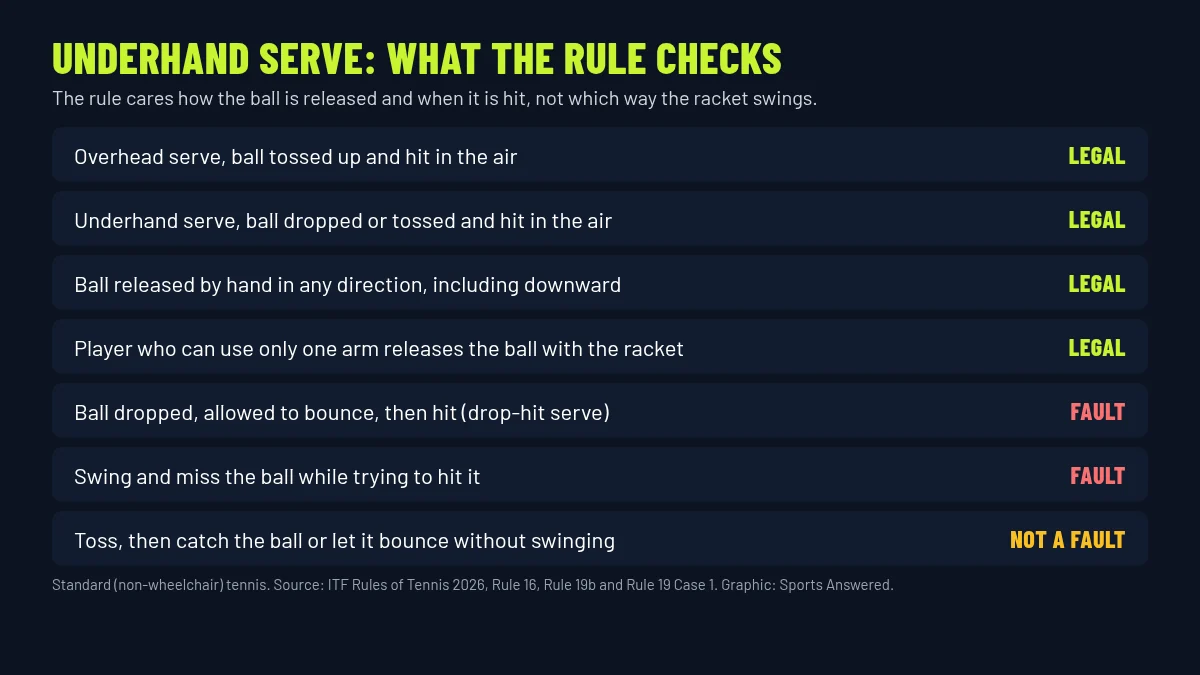
Yes. An underhand serve is legal in tennis. The rule only checks two things: you release the ball by hand, in any direction, and you hit it with the racket before it hits the ground. If you drop the ball and let it bounce before you hit it, that is a fault (ITF Rules of Tennis 2026, Rules 16 and 19a).
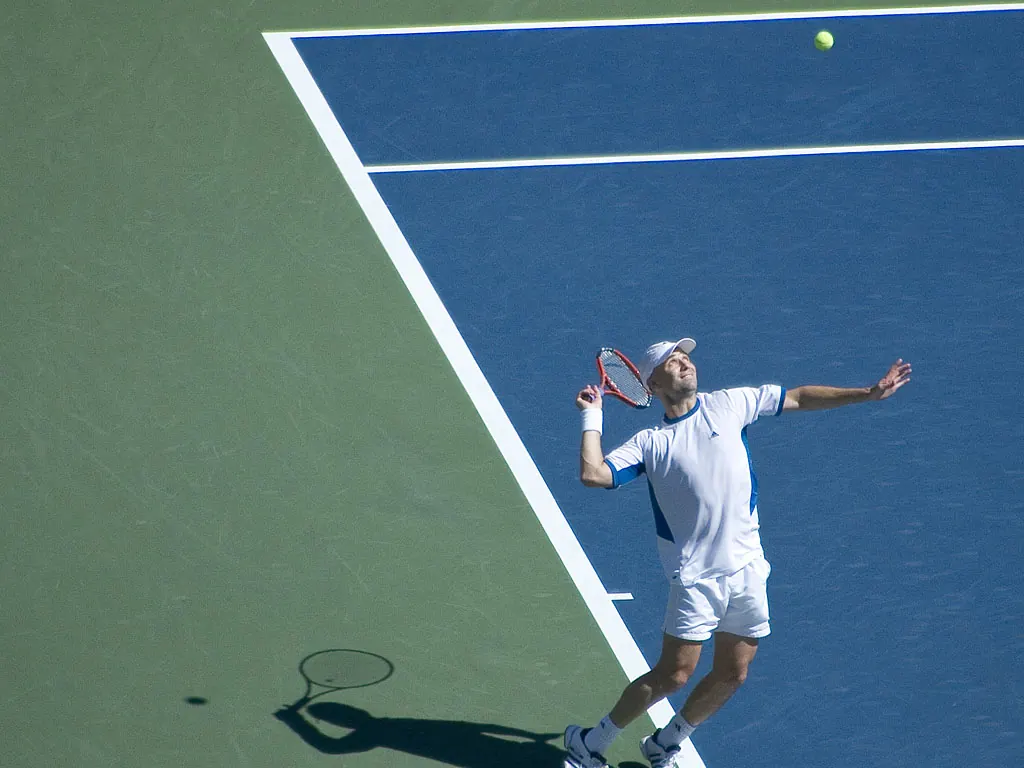
Everything else about serving stays the same. You still stand behind the baseline, serve to the diagonal box, and avoid foot faults.
What Rule 16 actually says
Rule 16 of the 2026 ITF rules reads: "The server shall then release the ball by hand in any direction and hit the ball with the racket before the ball hits the ground."
Nothing in that sentence mentions an overhead swing or a toss above the head. "Any direction" covers tossing the ball up, dropping it down or flicking it sideways. The USTA reads it the same way: as long as the racket hits the ball before the ground, it does not matter whether the release was upward or downward (USTA underhand serve ruling).
One more line in Rule 16 matters for some players. A player who can use only one arm may release the ball with the racket instead of the hand.
What is still a fault on an underhand serve
| What you do | Ruling | Rule |
|---|---|---|
| Drop the ball, let it bounce, then hit it | Fault | 16, 19a |
| Swing and miss while trying to hit it | Fault | 19b |
| Touch the baseline or the court with a foot during the motion | Foot fault | 18, 19a |
| Walk or run during the motion | Foot fault | 18a |
| Serve hits the net post or a singles stick before landing | Fault | 19c |
| Serve hits you or your doubles partner | Fault | 19d |
| Toss the ball, then catch it or let it drop without swinging | Not a fault, serve again | 19, Case 1 |
The bounce rule catches beginners most. A drop-and-bounce serve feels natural because it is how you start a rally in practice. In a match it is a service fault every time.
The foot fault rules do not change with the swing direction. If you need the details, see the tennis foot fault rule.
Can the receiver complain that it was a "quick" serve?
This is where most underhand arguments start. The rule is about readiness, not about the style of the serve.
Rule 21 says the server must not serve until the receiver is ready. It also says the receiver must play to the server's reasonable pace. A receiver who attempts to return the serve is considered ready. If the receiver really was not ready, the serve is a let and is replayed (Rule 22b).
The USTA Code for matches without officials says the same thing in plainer terms. If a player attempts to return a serve, "even if it is a 'quick' serve," the receiver is presumed to be ready (USTA Friend at Court 2026, The Code, item 29).
So if you swing at an underhand serve and miss, you cannot claim afterwards that you were not ready. If you were not ready, do not try to play it.
The most famous underhand serve: Chang vs Lendl, 1989
At Roland-Garros in 1989, 17-year-old Michael Chang played world No. 1 Ivan Lendl in the fourth round. Chang lost the first two sets and then started cramping in the fifth set (Roland-Garros match archive).
Serving at 4-3, 15-30 in the fifth, he hit an underarm serve. Lendl got to it, but his forehand return lacked depth, and Chang won the point with a forehand pass. Chang won the match 4-6, 4-6, 6-3, 6-3, 6-3 and went on to win the title. Roland-Garros quotes him on the serve: "I knew I had to try something. When I'd go up for a serve, I'd cramp."
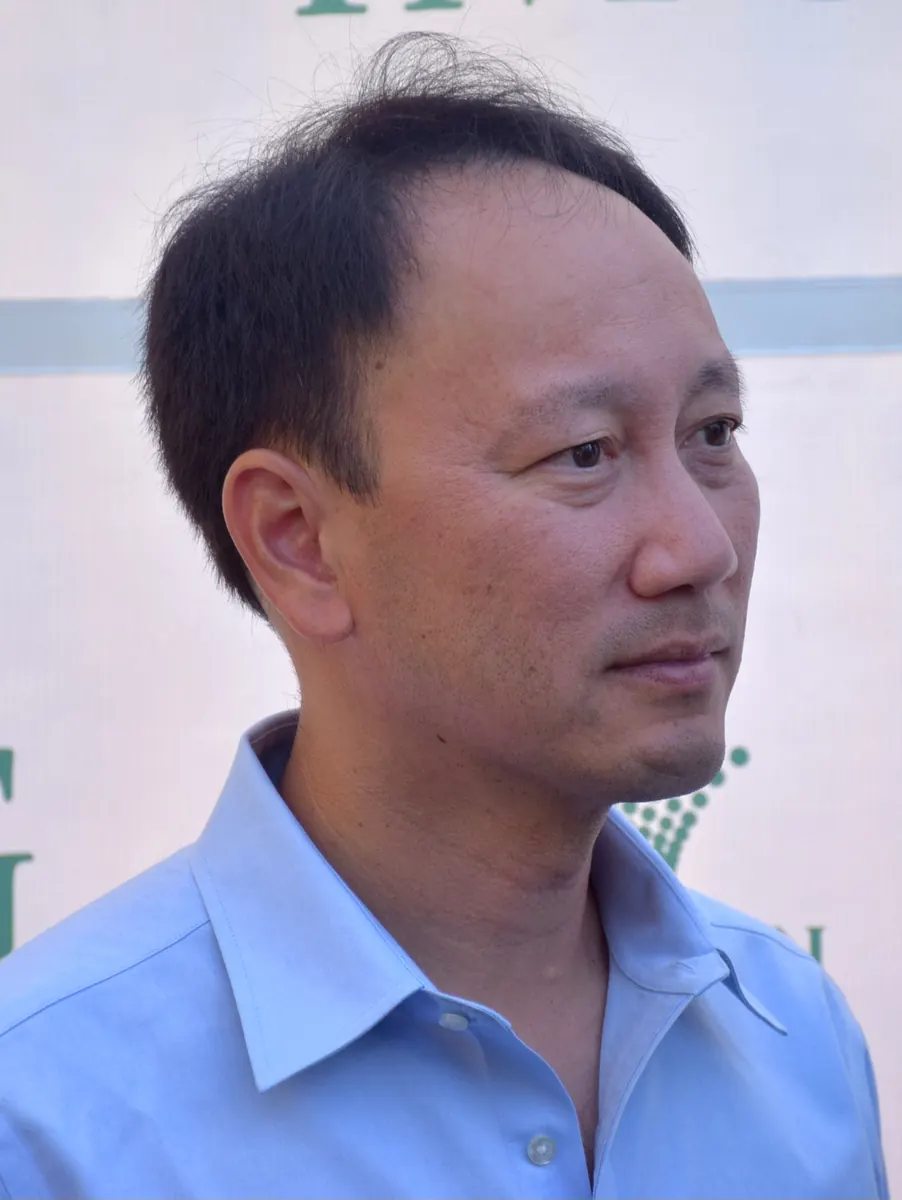
The point of the story for club players: the serve was legal, and playing through an injury is one reason to use it. The USTA ruling linked above answers a question from a player who hurt a shoulder mid-match and switched to underhand.
The wheelchair exception
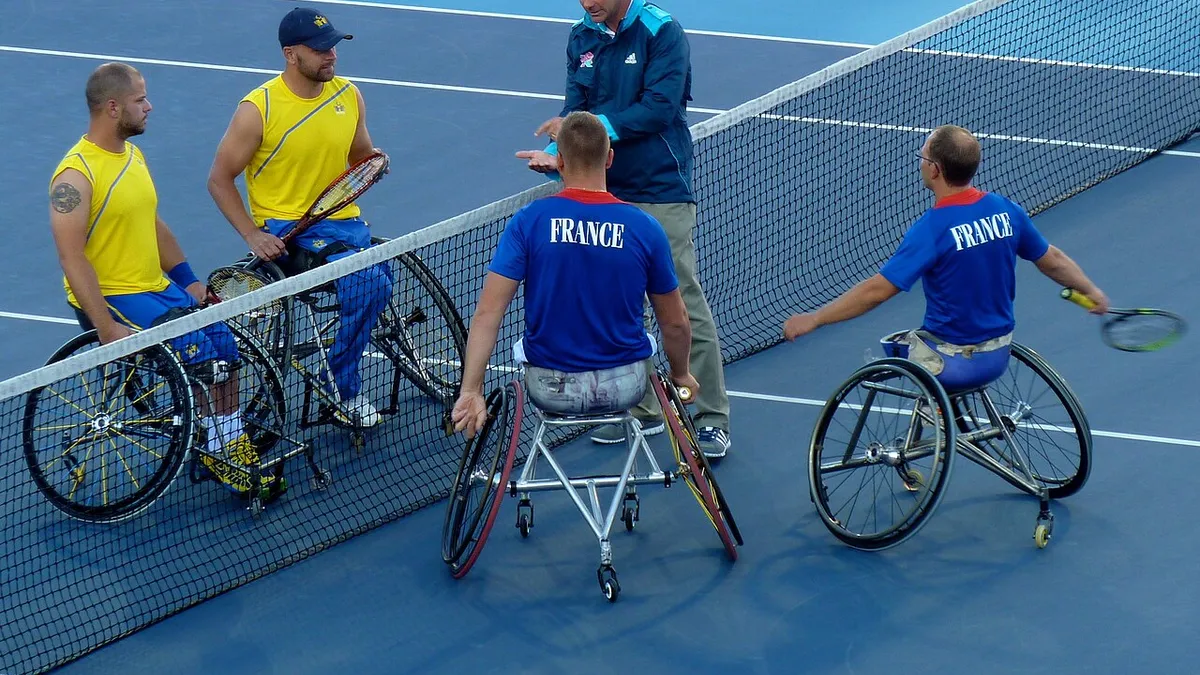
The ITF Wheelchair Tennis Rules allow one version of the bounce serve. If conventional serving is physically impossible for a quad player, the player or another person may drop the ball and let it bounce before it is struck. The same method must then be used for the whole match. This exception does not apply in standard tennis.
Tennis vs pickleball serves
Players who switch between the two sports often mix up the serve rules.
| Tennis | Pickleball | |
|---|---|---|
| Underhand serve | Allowed, not required | Required for the volley serve (upward arc, contact below the waist) |
| Overhead serve | Allowed | Not allowed |
| Letting the ball bounce first | Fault (standard tennis) | Allowed with the drop serve, any number of bounces |
| Serve clips the net and lands in | Let, serve again | Legal, play on |
Pickleball rows: 2026 USA Pickleball Official Rulebook, Rules 7.C, 7.D and 7.E. For the full pickleball checklist, see how to check if your pickleball serve is legal.
Related rulings
A serve that hits your doubles partner is a fault; other cases are in what happens if the ball hits you in tennis.
Quick questions
- Is an underhand serve legal at the pro level?
Yes. The ITF Rules of Tennis apply at every level, and Rule 16 only requires that you release the ball by hand in any direction and hit it before it touches the ground. It says nothing about the direction of the swing.
- Can I drop the ball, let it bounce and then serve?
No, not in standard tennis. Rule 16 requires the racket to hit the ball before it hits the ground, so a bounce first breaks the rule and is a service fault (Rule 19a). The wheelchair rules make one exception for quad players who cannot serve conventionally.
- Is it bad sportsmanship to serve underhand?
Neither the 2026 ITF rules nor the USTA Code mentions underhand serving at all, so nothing bans it as unsporting. The rule that matters is readiness: you may not serve until the receiver is ready, and a receiver who tries to return the serve is considered ready (Rule 21).
- Does a foot fault still count on an underhand serve?
Yes. Rule 18 applies to every service motion. You must not touch the baseline or the court inside it, or walk or run, while you serve.
- What if I toss the ball and decide not to hit it?
That is not a fault. You may catch the ball with your hand or racket, or let it bounce, and then serve again (Rule 19, Case 1).
Rulebook sources
- ITF Rules of Tennis 2026 (Rules 16, 18, 19, 21 and 22, and Wheelchair Tennis Rules), International Tennis Federationitftennis.com
- Friend at Court 2026 (The Code, item 29), USTAusta.com
- Underhand Serve: Is it allowed?, USTAusta.com
- One day, one epic match: Chang - Lendl (4th round 1989), Roland-Garrosrolandgarros.com
Rule statements were checked against these sources on October 28, 2026. See a mistake? Read our corrections policy or email contact@sportsanswered.com.
Who answered
Sports Answered Editorial Team. Researched against the official rules, written and fact-checked by our editors. How we answer
Expert review
Reviewed by John Craig on October 28, 2026.