Tennis Foot Fault Rule: What Counts, Who Can Call It, and the Penalty
The rulingA service fault, called sparingly
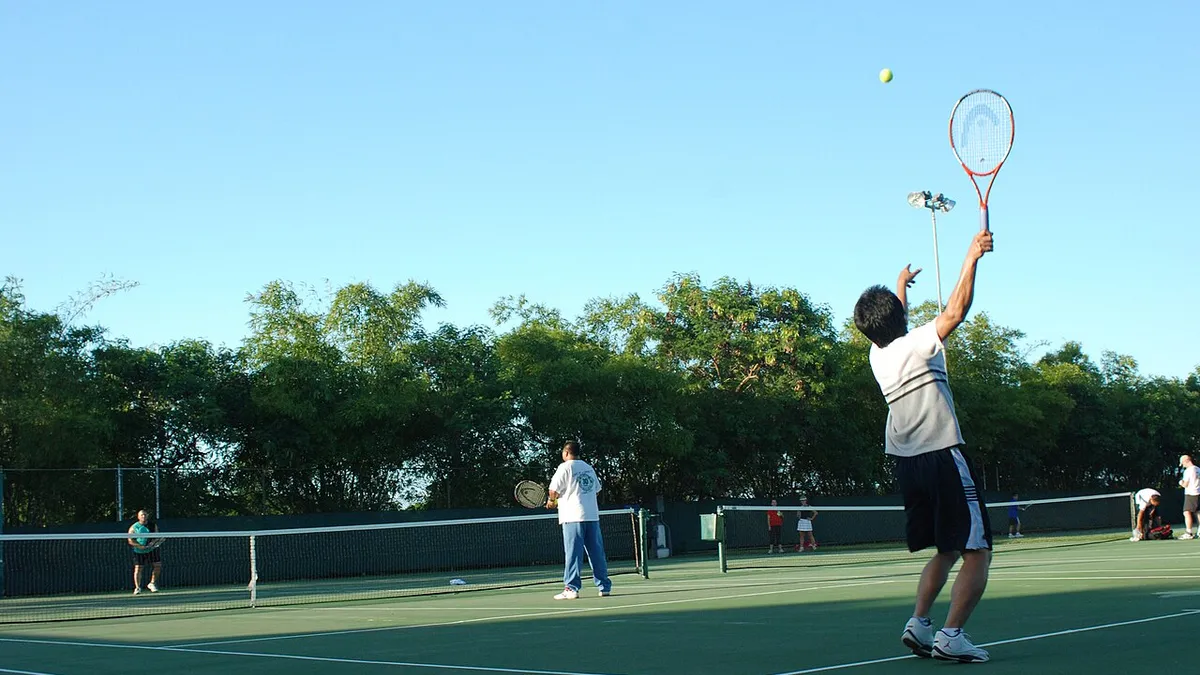
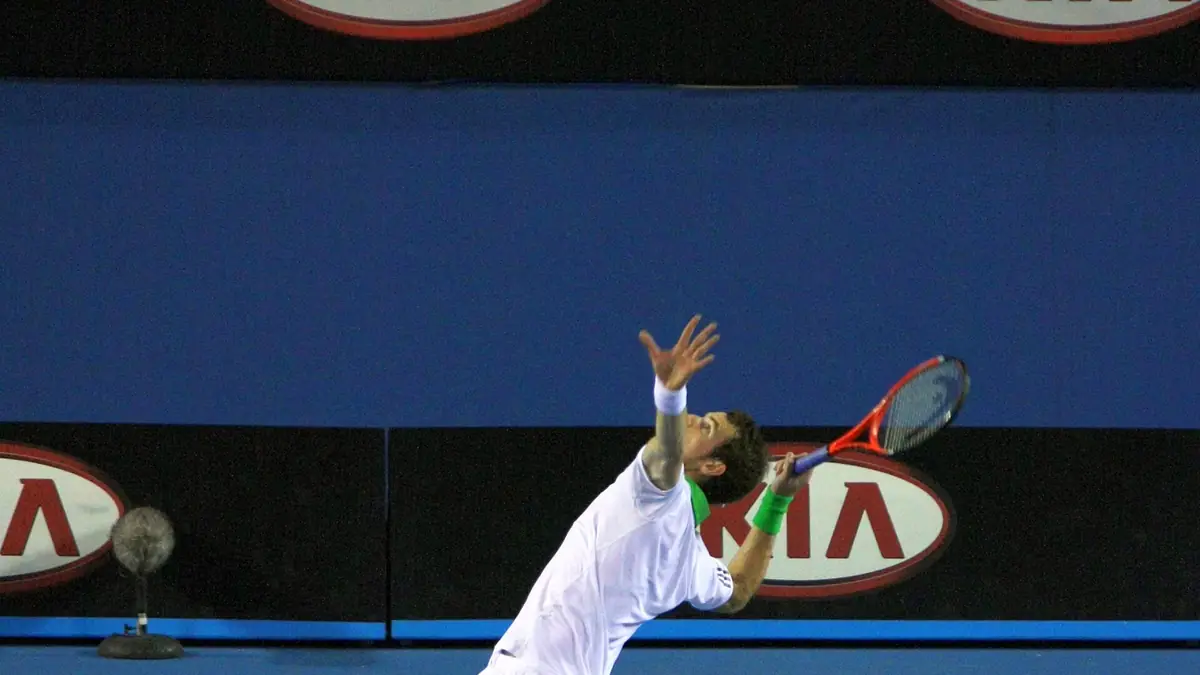
A foot fault happens when, during the service motion, the server touches the baseline or the court with either foot, steps outside the imaginary extension of the sideline, touches the imaginary extension of the center mark, or changes position by walking or running (ITF Rules of Tennis 2026, Rule 18). A foot fault counts as a service fault, so on a second serve it's a double fault (Rules 19a and 24a).
What counts as a foot fault
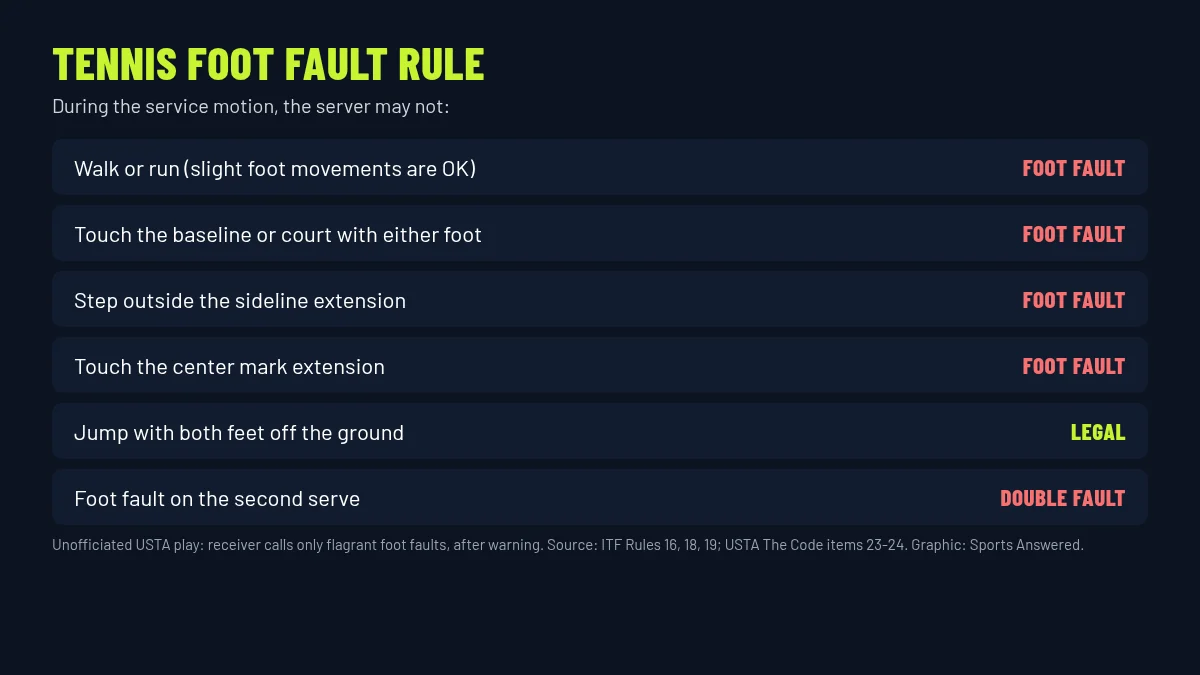
| During the service motion, the server may not... | Rule |
|---|---|
| Change position by walking or running (slight foot movements are allowed) | 18a |
| Touch the baseline or the court with either foot | 18b |
| Touch the area outside the imaginary extension of the sideline with either foot | 18c |
| Touch the imaginary extension of the center mark with either foot | 18d |
The service motion runs from the start of the motion until the racket hits or misses the ball (Rule 16). Before starting, the server must stand at rest with both feet behind the baseline and between the imaginary extensions of the center mark and the sideline.
Common questions on the rule
Jumping is allowed. ITF Rule 18, Case 2 says the server may have one or both feet off the ground. Landing inside the court after you've hit the ball is not a foot fault, because the service motion has ended.
Singles vs doubles position. In singles, you may not serve from behind the part of the baseline between the singles and doubles sidelines. In doubles, you may (Rule 18, Case 1).
Touching the line counts. The Code in Friend at Court 2026 (item 23) says it is a foot fault when a foot just touches the line, even if the server doesn't follow the serve to the net.
The penalty
| When it happens | Result | Rule |
|---|---|---|
| First serve | Service fault; serve again from the same side | 19a, 20 |
| Second serve | Double fault; server loses the point | 19a, 24a |
Related serve rules that are not foot faults
Rule 19 lists the other ways a serve becomes a fault (ITF). These are often confused with foot faults:
| What happens | Ruling | Rule |
|---|---|---|
| You toss, decide not to swing, and catch the ball or let it bounce | Not a fault; toss again | 19, Case 1 |
| You swing at the toss and miss | Fault | 19b |
| The serve hits a net post, singles stick or permanent fixture before landing | Fault | 19c |
| The serve hits your doubles partner | Fault | 19d |
Rule 16 also says the server releases the ball by hand, in any direction, and hits it before it hits the ground. A player who can use only one arm may release the ball with the racket.
Who can call a foot fault?
In matches with officials, the umpire or line umpires call foot faults. In unofficiated USTA play, The Code limits the receiver's side. Item 24 says the receiver or the receiver's partner may call foot faults only after all reasonable efforts, such as warning the server and trying to get an official to the court, have failed, and only when the foot fault is so flagrant that it is clearly visible from the receiver's side (Friend at Court 2026). Item 41 lists flagrant foot faults among the reasons a player may contact an official during play.
In officiated matches
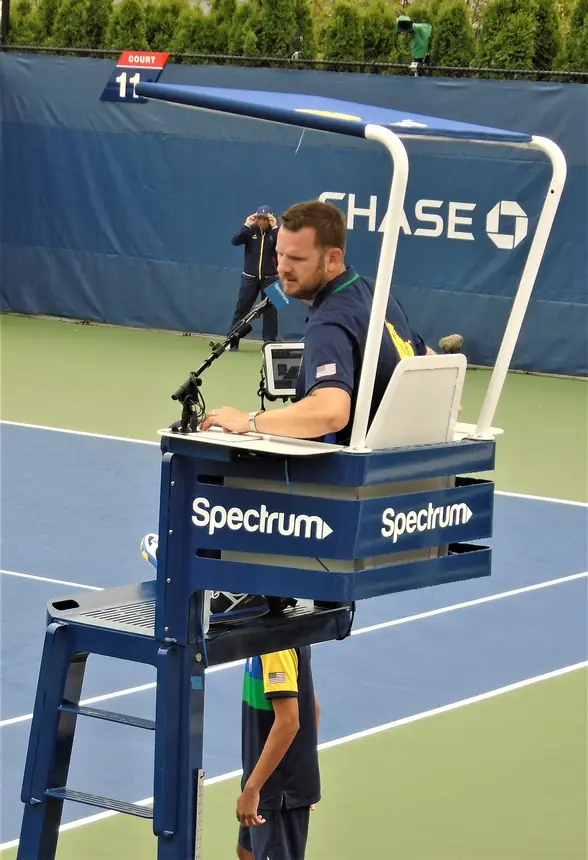
When line umpires are assigned, they make all calls on their line, including foot faults. The chair umpire can overrule a line umpire only when sure a clear mistake was made, and calls foot faults on any line with no line umpire assigned. In matches with a chair umpire, that umpire is the final authority on questions of fact during the match (Friend at Court 2026, Appendix VII). So a foot-fault call by an official is a call of fact, and arguing it with the umpire won't change it.
Wheelchair tennis
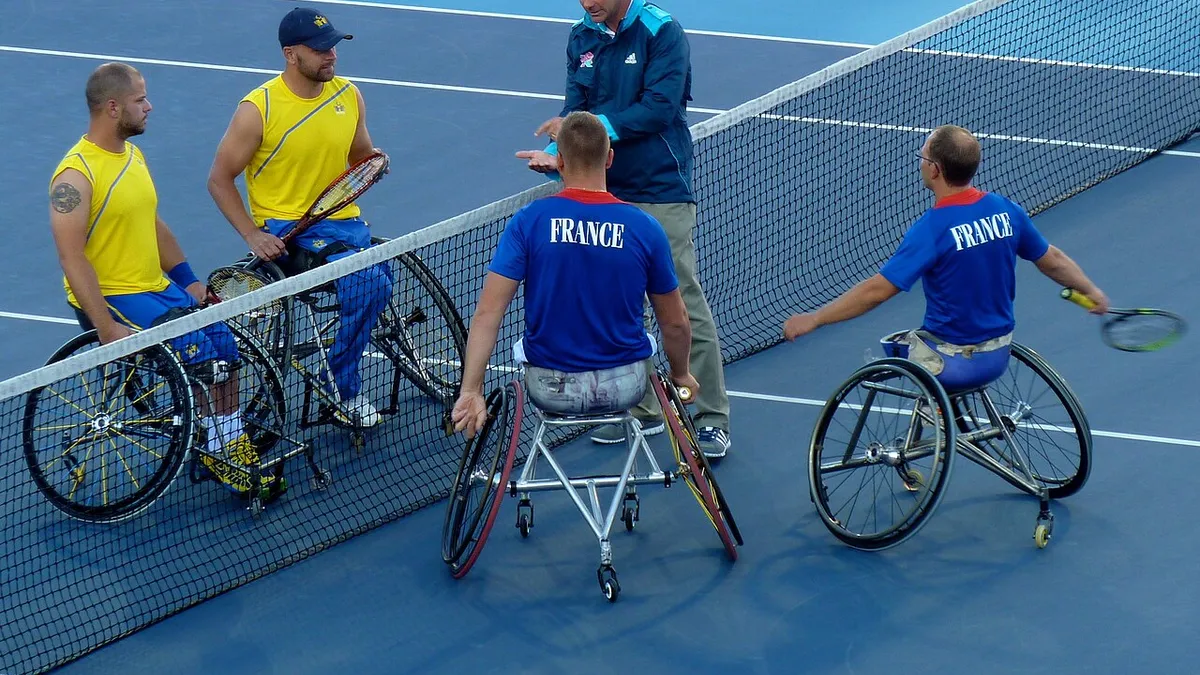
The ITF's Rules of Wheelchair Tennis, printed in Friend at Court, replace the foot rules with wheel rules. Immediately before serving, the server must be stationary, and is then allowed one push before striking the ball. Throughout the serve, the server must not touch with any wheel any area other than behind the baseline, within the imaginary extensions of the center mark and sideline. The wheelchair is treated as part of the body. If a conventional serve is physically impossible for a quad player, the player or another person may drop the ball and let it bounce before it is struck, using that same method for the whole match (Friend at Court 2026).
Foot rules in pickleball are different
Players who also play pickleball sometimes mix up the two. In tennis you may jump, and both feet may be off the ground (Rule 18, Case 2). Under the 2026 USA Pickleball Official Rulebook, at least one foot must be on the ground in the serving area when the serve is hit (Rule 7.A.1), and neither foot may touch the court (7.A.2) or the area outside the serving area (7.A.3) at contact. The pickleball rule is judged at the moment of contact, while the tennis rule covers the whole service motion.
How to stop foot faulting
These steps come straight from the rule:
- Set both feet behind the baseline and between the center mark and sideline extensions, and come to rest before you start your motion (Rule 16).
- Leave a small gap between your front foot and the baseline so a slight shuffle doesn't touch the line.
- Don't step or walk into the serve; slight foot movements are fine, but changing position by walking or running is not (Rule 18a).
- If you jump, make sure your feet land after contact.
Serving faults also matter in tiebreaks, where every point counts; our guide to tennis tiebreak rules and serving order covers who serves when.
Quick questions
- Is it a foot fault if my foot just touches the baseline?
Yes. Touching the baseline with either foot during the service motion is a foot fault, even if you stay back and don't follow your serve to the net.
- Can I jump when I serve?
Yes. ITF Rule 18, Case 2 says the server may have one or both feet off the ground. Just don't touch the baseline or court before you hit the ball.
- What happens if you foot fault on a second serve?
A foot fault is a service fault, so a foot fault on the second serve is a double fault and you lose the point.
- Can the receiver call a foot fault?
In unofficiated USTA play, only as a last resort: after warning the server and trying to get an official, and only if the foot fault is flagrant enough to see clearly from the receiver's side.
Rulebook sources
- ITF Rules of Tennis 2026 (Rules 16, 18, 19 and 24), International Tennis Federationitftennis.com
- Friend at Court 2026 (The Code, items 23, 24 and 41), USTAusta.com
- 2026 USA Pickleball Official Rulebookusapickleball.org
Rule statements were checked against these sources on October 24, 2026. See a mistake? Read our corrections policy or email contact@sportsanswered.com.
Who answered
Sports Answered Editorial Team. Researched against the official rules, written and fact-checked by our editors. How we answer
Expert review
Reviewed by John Craig on October 19, 2026.