How Much Time Between Points in Tennis? 25 Seconds, Then the Clock Runs Out
The ruling25 seconds between points
You get 25 seconds between points in tennis. The clock runs from the moment one point finishes until the first serve of the next point is struck, under Rule 29a of the ITF 2026 Rules of Tennis. If that first serve is a fault, the second serve has to follow without delay.
Rule 29a also sets the longer breaks: a maximum of 90 seconds when players change ends after a game, and 120 seconds at the end of each set. After the first game of each set and during a tie-break, players change ends with no rest at all.
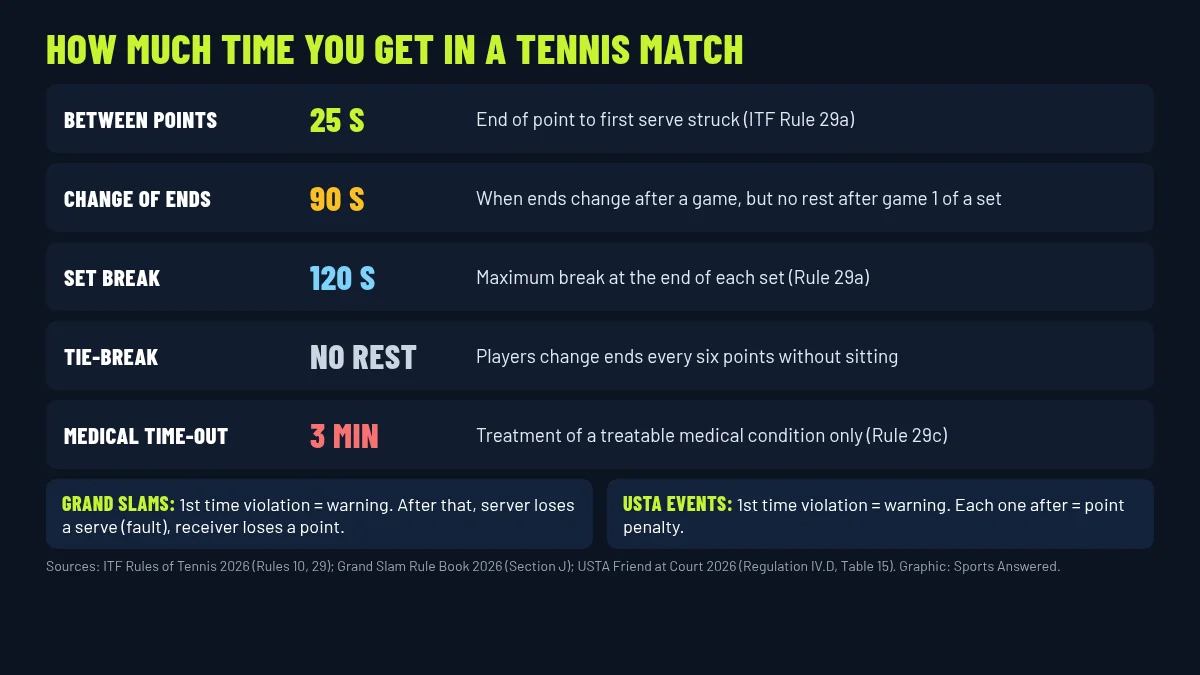
Every time limit in a match
| Moment | Maximum time | Rule |
|---|---|---|
| Between points | 25 seconds | ITF Rule 29a |
| Change of ends after a game | 90 seconds | ITF Rule 29a |
| After the first game of a set | No rest, change ends straight away | ITF Rule 29a |
| During a tie-break (ends change every six points) | No rest | ITF Rules 10 and 29a |
| Set break | 120 seconds | ITF Rule 29a |
| Warm-up | 5 minutes, unless organisers decide otherwise | ITF Rule 29e |
| Medical time-out | 3 minutes of treatment | ITF Rule 29c |
| Optional rest after set 2 (best of 3) or set 3 (best of 5) | 10 minutes, only if announced before the event | ITF Rule 29d |
Players change ends after the first, third and every following odd game of a set (ITF Rule 10). If a set ends on an even number of games, they wait until after the first game of the next set. Event organisers can apply to the ITF to extend the 90-second and 120-second breaks (Rule 29a).
When the 25-second clock starts at the pros
The Grand Slam Rule Book 2026 (Section J) uses the same numbers and is specific about timing. The 25 seconds run from the moment the ball goes out of play at the end of a point until the ball is struck for the first serve of the next point. The 90-second changeover and the 120-second set break are measured the same way, ending when the first serve of the next game or set is struck.
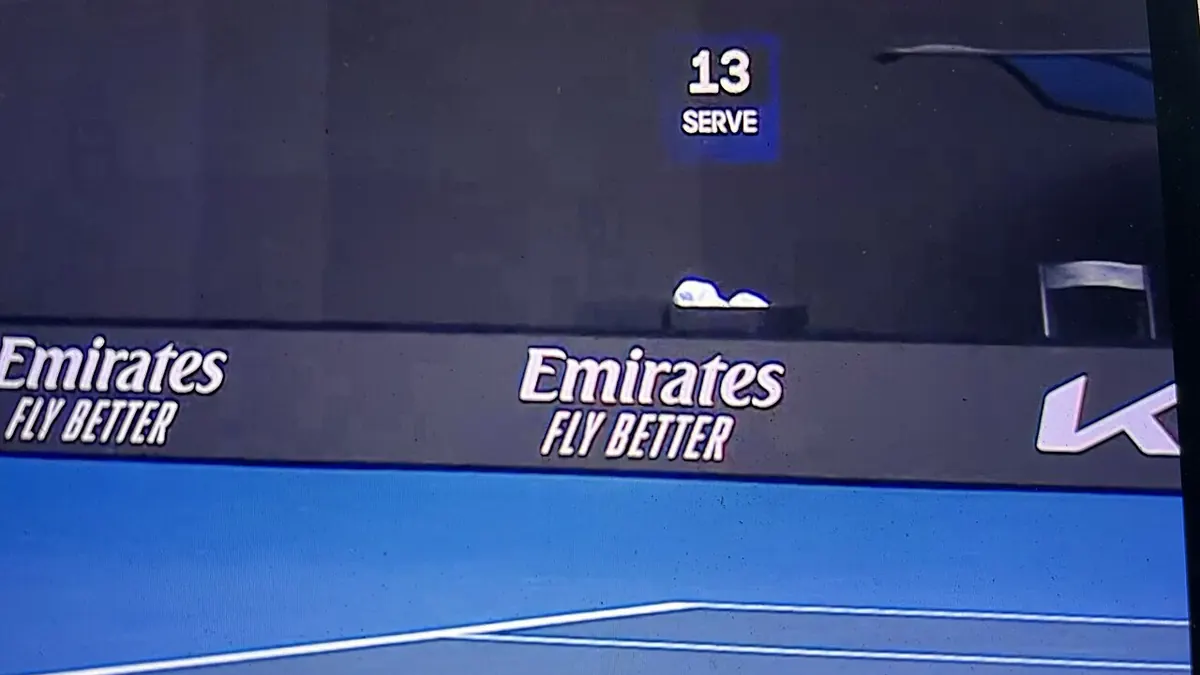
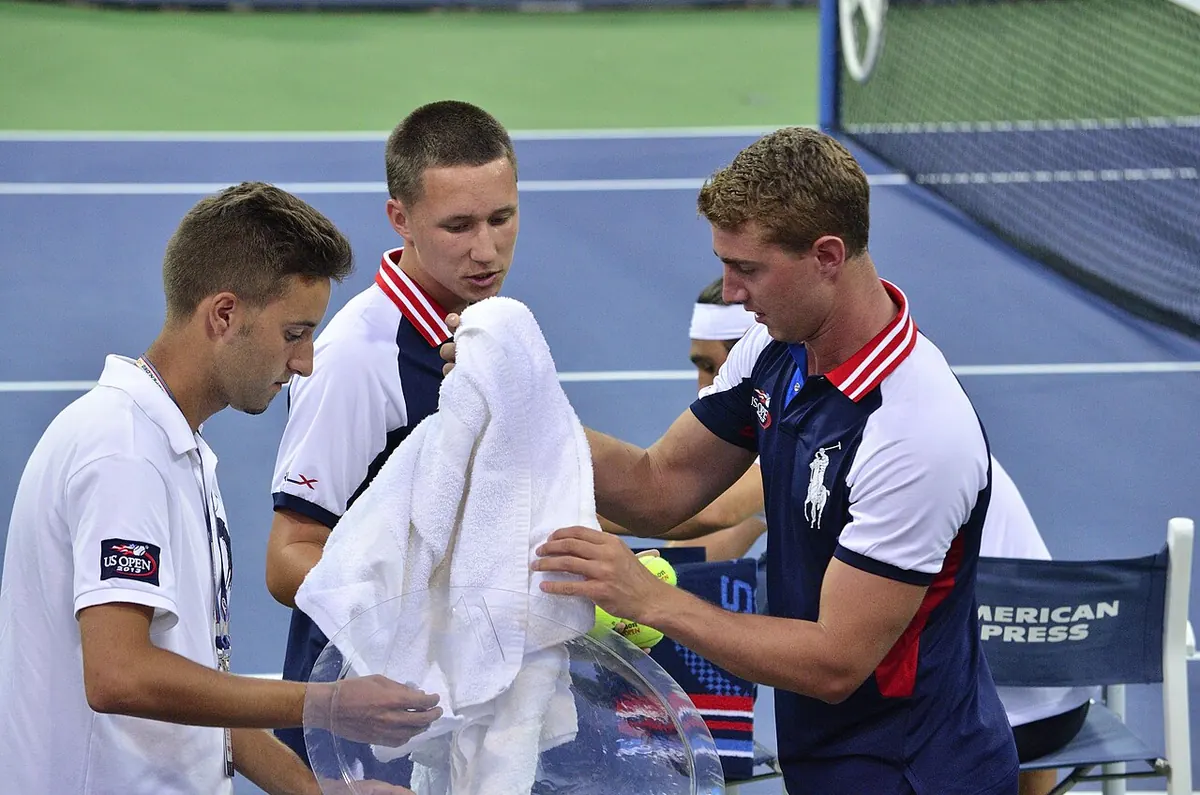
Fans see this on a serve clock beside the court. When the US Open rolled the clock out to all main-draw matches in 2018, USOpen.org explained that during a game the countdown begins once the chair umpire announces the score, and the umpire can pause the clock, then resume it or reset it to 25 seconds. After even-numbered games, the clock starts when all the balls are in place at the server's end.
What happens if you take too long
| Level | First time violation | Each one after that | Source |
|---|---|---|---|
| Grand Slams, server | Warning | Fault (loses that serve) | Grand Slam Rule Book, Section J |
| Grand Slams, receiver | Warning | Point penalty | Grand Slam Rule Book, Section J |
| USTA tournaments | Warning | One-point penalty | USTA Friend at Court, Table 15 |
The warning is shared: the first violation as either server or receiver is the warning, and later ones are penalised by role (Grand Slam Rule Book, Section J). When a delay comes from a medical condition, a refusal to play or not returning to court on time, Grand Slam umpires treat it as a Code Violation for delay of game instead.
In USTA events, two time violations in a row are not assessed unless an actual point has been played in between (Friend at Court, Table 15).
The receiver is on the clock too
Rule 21 of the ITF Rules says the server may not serve until the receiver is ready, but the receiver must play to the server's reasonable pace and be ready within a reasonable time. At the Grand Slams, an umpire can give the receiver a time violation before the 25 seconds run out if the receiver is slowing the server down (Section J).
In club play, the USTA Code puts it this way: a receiver who attempts to return a serve, even a quick one, is presumed ready (Code item 29).
USTA and club matches
The 25-second limit is in the Rules of Tennis, but the USTA 2026 Friend at Court applies it strictly when a certified official is watching the match directly (Regulation IV.D.5). USTA Comment 29.1 adds that the 25 seconds do not apply when a player has to chase a stray ball.
Without an umpire, the Code lists what counts as stalling (item 40):
- Warming up longer than the allotted time
- Playing at about one-third of your normal pace
- Taking more than 90 seconds on the odd-game changeover or more than 2 minutes on the set break
- Taking longer than the time allowed during a rest period
- Starting a discussion or argument in order to rest
- Clearing a missed first serve that does not need to be cleared
- Excessive bouncing of the ball before any serve
If an opponent is stalling, contact an official. Stalling is penalised under the Point Penalty System (Code item 40).
Breaks that stop the clock
- Broken equipment. If clothing, footwear or necessary equipment (not the racket) breaks for reasons outside your control, you may get reasonable extra time to fix it (ITF Rule 29b).
- Medical time-out. No extra time is allowed to recover condition, but a player with a treatable medical condition may get one 3-minute medical time-out for it (Rule 29c). At the Grand Slams the time-out starts when the physiotherapist is ready to begin treatment.
- Toilet and change of attire breaks. A limited number may be allowed if announced before the event (Rule 29c). The Grand Slam Rule Book sets its own limits, for example a 3-minute toilet break in men's matches.
The tie-break is the one stretch with no breaks at all, so knowing how a tennis tiebreak works helps you plan your energy. To keep the score without losing track of time, use our tennis score keeper.
Quick questions
- How many seconds do you get between points in tennis?
25 seconds. ITF Rule 29a allows a maximum of 25 seconds from the moment one point ends until the first serve of the next point is struck.
- How long is a changeover in tennis?
Up to 90 seconds when players change ends after a game, and up to 120 seconds at the set break. There is no rest after the first game of each set or during a tie-break.
- What happens if a tennis player goes over 25 seconds?
At the Grand Slams the first time violation is a warning. After that, a server loses a serve (a fault) and a receiver loses a point. In USTA events the first offense is a warning and each additional one is a one-point penalty.
- Does the receiver have to be ready within 25 seconds?
Yes. The receiver must play to the server's reasonable pace (ITF Rule 21), and Grand Slam umpires can give a receiver a time violation before the 25 seconds are up.
- Is there a time limit between points in club tennis?
The 25-second rule is part of the Rules of Tennis, but in USTA play it is enforced by a certified official watching the match. Without one, a player who thinks an opponent is stalling should contact an official (USTA Code item 40).
Rulebook sources
- ITF 2026 Rules of Tennis (Rules 10, 21, 29), International Tennis Federationitftennis.com
- Grand Slam Rule Book 2026 (Section J, Start of Match / Time Violation / Delay of Game), ITFitftennis.com
- USTA 2026 Friend at Court (USTA Comment 29.1, The Code items 29 and 40, Regulation IV.D and Table 15), USTAusta.com
- Shot clock, warm-up clock to be implemented at 2018 US Open, USOpen.org (July 11, 2018)usopen.org
Rule statements were checked against these sources on October 30, 2026. See a mistake? Read our corrections policy or email contact@sportsanswered.com.
Who answered
Sports Answered Editorial Team. Researched against the official rules, written and fact-checked by our editors. How we answer
Expert review
Reviewed by John Craig on October 30, 2026.