Is My Pickleball Paddle Legal? A Five-Step Check for 2026
The rulingLegal if approved, listed and in spec
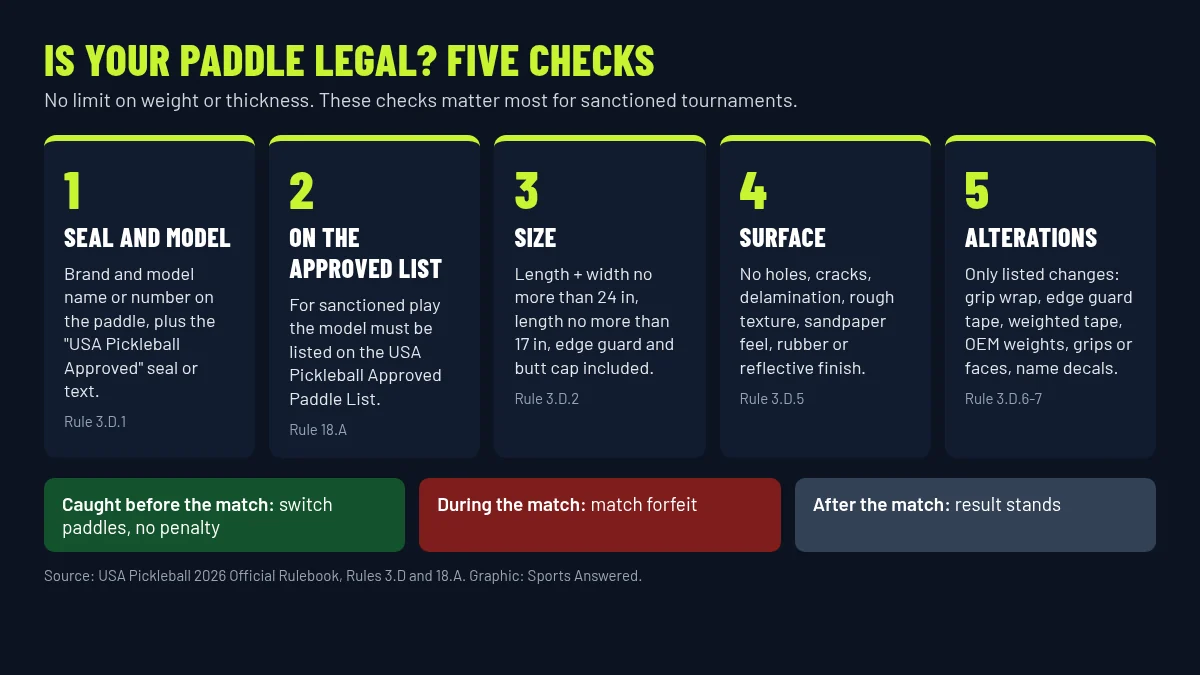
Your paddle is legal for sanctioned tournament play if it shows the brand, the model name or number and the "USA Pickleball Approved" seal or text, appears on the USA Pickleball Approved Paddle List, fits the size limit (length plus width no more than 24 inches, length no more than 17 inches) and has no banned surface features or unapproved alterations. There is no limit on weight or thickness. For casual games, USA Pickleball says even a decertified paddle can still be used (2026 USA Pickleball Official Rulebook, Rules 3.D and 18.A).
Check 1: the seal and the model name
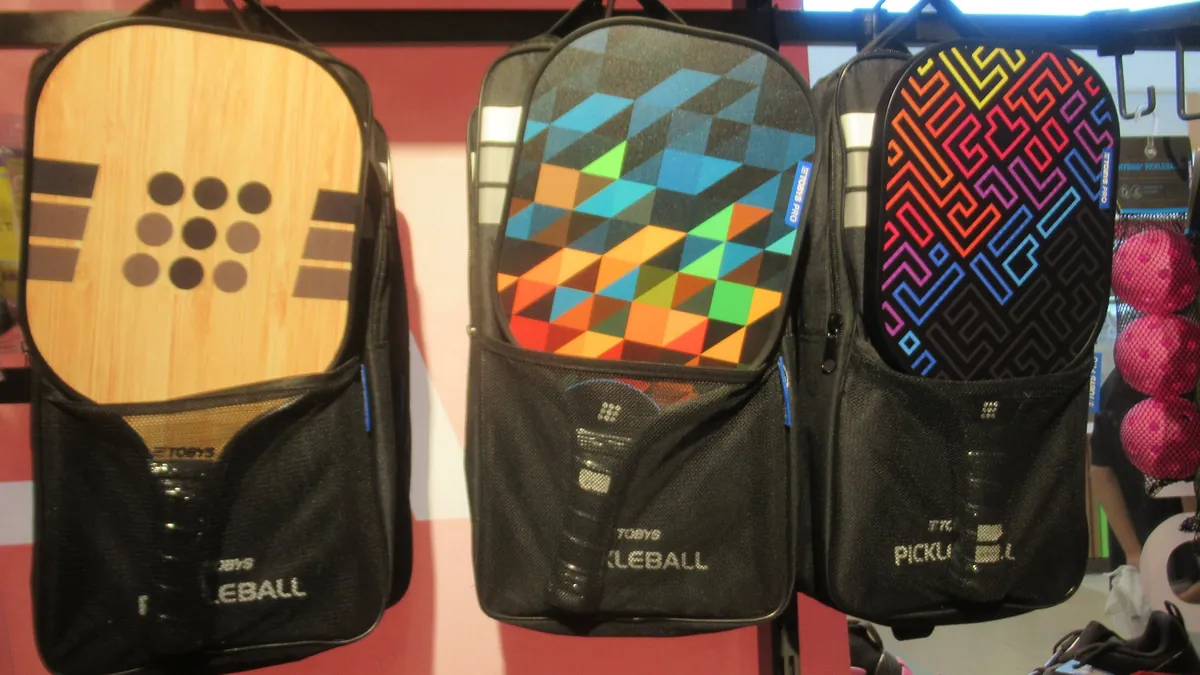
Look at the paddle itself. Rule 3.D.1 requires a clearly marked brand and model name or model number, plus the "USA Pickleball Approved" seal or text treatment. Older paddles made before the seal requirement can still be used in sanctioned play, but only if the model is still on the approved list.
Check 2: is the model on the approved list?
Rule 18.A puts this on you: players must confirm their paddle is approved and listed. The list is searchable on the USA Pickleball equipment site. Search by brand and model, and match the exact model name, since one brand can have several versions of a paddle with only small name differences.
A paddle can drop off the list. The Equipment Standards Manual says approval can be revoked with 18 months' notice, and the equipment site notes that this sunset period can be shorter for paddles found to give extra power. The manual also requires paddle designs to stay compliant over their entire useful life, including any break-in or wear effects (Equipment Standards Manual, Section 2.F).
Check 3: measure it
Rule 3.D.2 sets two limits, both measured with any edge guard and butt cap included:
- Length plus width: 24 inches (60.96 cm) or less.
- Length alone: 17 inches (43.18 cm) or less.
Example: a paddle 16.5 inches long and 7.5 inches wide adds up to exactly 24 inches, which is legal. The same paddle at 7.75 inches wide adds up to 24.25 and is not. A 17.5-inch paddle fails no matter how narrow it is.
There is no thickness limit and no weight limit (Rules 3.D.2 and 3.D.3).
Check 4: the hitting surface
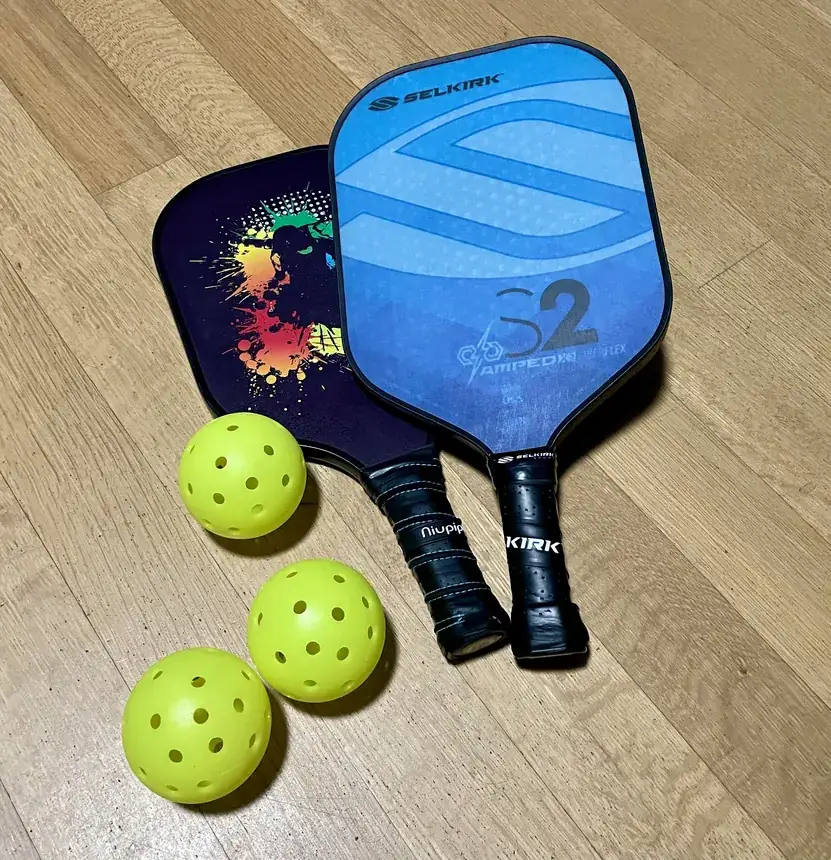
Run your fingers over both faces. Rule 3.D.5 bans a hitting surface that has:
- Holes, cracks, delamination or dents that break the paddle skin
- Rough texturing or a sandpaper feel
- Natural or synthetic rubber
- Moving parts that can add head momentum
- Anti-skid paint, sand-textured paint, rubber particles, vinyl compounds or anything else that adds spin
- A reflective finish that could affect an opponent's vision
A cracked or delaminated face is the one that catches most club players. It can happen to any paddle with heavy use, and it makes the paddle non-compliant even if the model is on the list.
Check 5: what you have changed
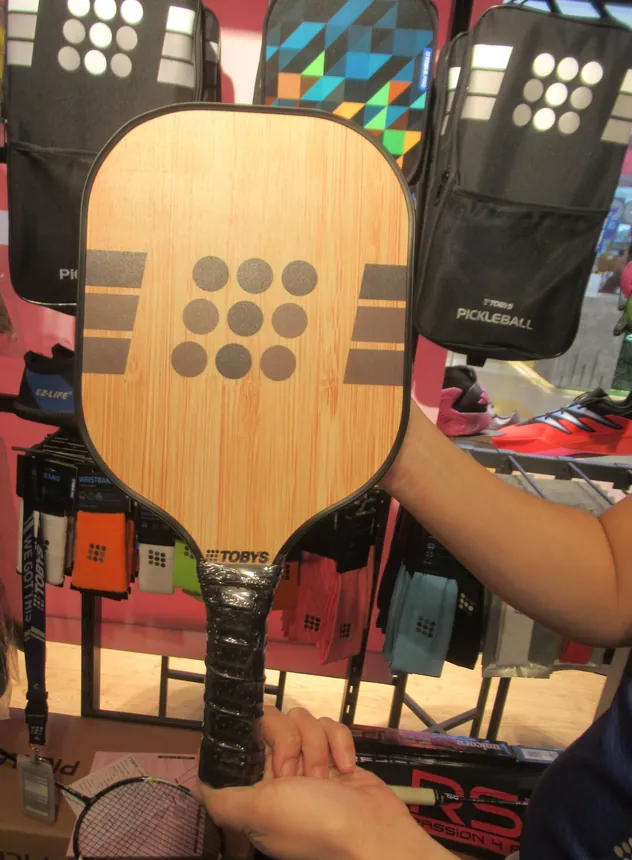
Altered paddles must still meet every specification, and Rule 3.D.6 lists the only changes a player may make.
| Allowed (Rule 3.D.6) | Not allowed |
|---|---|
| Adding or replacing edge guard tape | Aftermarket graphics on a commercially made paddle |
| Adding weighted tape | Tape or decals beyond the 3.D.7 limits |
| Adding or removing weights in a factory weight system | Any change not on the 3.D.6 list |
| Swapping factory interchangeable grips or faces | Anything that adds a banned surface feature from 3.D.5 |
| Grip size inserts and grip wrap | |
| Name decals or ID markings, handwritten ID or an autograph |
Rule 3.D.7 sets the tape and decal limits on the face: no more than 1.0 inch (2.54 cm) above the top of the grip, and no more than 0.5 inch (1.27 cm) inside the outer edge, or inside the edge guard if one is fitted.
What happens if a paddle fails in a tournament
At sanctioned events the referee inspects paddles at the pre-match briefing (Rule 17.C.1). What happens next depends on timing (Rule 18.A):
| When it is found | Result |
|---|---|
| Before the match starts | Switch to a compliant paddle. No penalty. |
| During the match | Match forfeit |
| After the match has ended | The match result stands |
The practical lesson: bring a second legal paddle, and check your list status before the event, not on court.
Casual play vs sanctioned play
The rulebook's size and surface rules are written for all play, but enforcement is a tournament matter. USA Pickleball's equipment site says decertification only applies to sanctioned tournament play, and players can still use those paddles recreationally. Leagues and clubs may set their own policy, so check before league night.
What changed in 2026: the spin rate test
On July 8, 2026, USA Pickleball confirmed a new spin rate test. From October 1, 2026, paddles submitted for certification are limited to a maximum of 2,100 RPM (USA Pickleball spin rate update). The upper limits for surface roughness and friction become measurements of record instead of pass or fail thresholds. Paddles certified earlier are held to the standards in force when they were certified, so an existing approved paddle does not become illegal because of this change alone.
Paddle rules during a rally
Legal equipment is only half of it. During a rally you may carry only one paddle, and touching the net with it while the ball is live is a fault. Our guide to pickleball net rules for touching, reaching over and going around the post covers the paddle-and-net situations, and the checklist on whether your pickleball serve is legal covers the serving motion.
Quick questions
- Is there a weight limit for pickleball paddles?
No. Rule 3.D.3 says there is no restriction on paddle weight, and Rule 3.D.2 says there is no restriction on thickness.
- Can I use a paddle that is not on the approved list for fun games?
USA Pickleball says decertification only applies to sanctioned tournament play, and players can still use those paddles for recreational play. For leagues or club events, check that event's own rules.
- What happens if my paddle is found to be illegal in a tournament?
Before the match: switch to a legal paddle, no penalty. During the match: match forfeit. After the match: the result stands (Rules 18.A.1 to 18.A.3).
- Can I put my name or a sticker on my paddle?
Yes, name decals and handwritten ID markings are allowed. Decals and tape on the face must not reach more than 1.0 inch above the top of the grip or more than 0.5 inch inside the edge or edge guard (Rule 3.D.7).
- Does the new spin rate test make my paddle illegal?
Not by itself. The spin rate limit applies to paddles submitted for certification from October 1, 2026. USA Pickleball says previously certified paddles are held to the standards in effect when they were certified.
Rulebook sources
- 2026 USA Pickleball Official Rulebook (Rules 3.D, 17.C.1 and 18.A), USA Pickleballusapickleball.org
- USA Pickleball Equipment Standards Manual (January 2025, Rev 3), USA Pickleballequipment.usapickleball.org
- USA Pickleball Equipment Evaluation and Certification (approved paddle list and FAQ), USA Pickleballequipment.usapickleball.org
- Update regarding the USA Pickleball spin rate test and implementation timeline (July 8, 2026), USA Pickleballusapickleball.org
Rule statements were checked against these sources on October 27, 2026. See a mistake? Read our corrections policy or email contact@sportsanswered.com.
Who answered
Sports Answered Editorial Team. Researched against the official rules, written and fact-checked by our editors. How we answer
Expert review
Reviewed by Jeff Rausch on October 27, 2026.